
LEOPARD SPOTLIGHT: Jordan Carter ’17
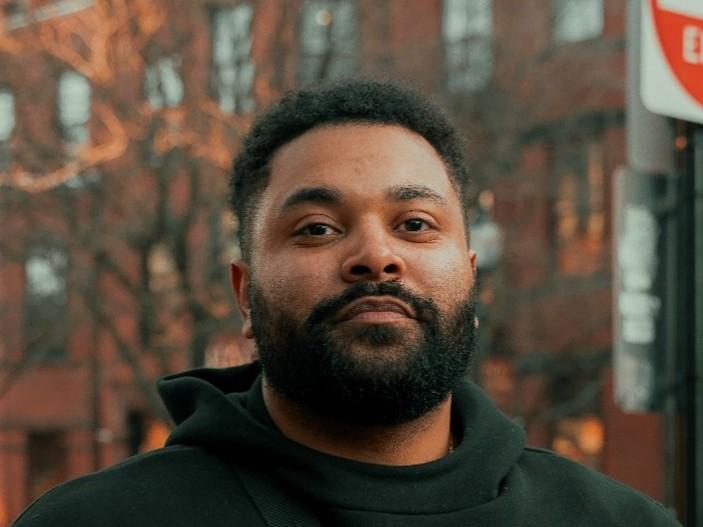
“Be patient, reflect on the feeling of the journey, and move on to the next opportunity.”
From building a Pokémon team randomizer to co-founding ScheduleLab, Jordan Carter '17 turned curiosity into a career. Now a Software Engineer and entrepreneur, he credits Wentworth with teaching him resilience and collaboration—skills that helped him navigate layoffs, launch a company, and embrace gratitude along the way.
What path did you take after graduation, and what was the most valuable lesson you learned during your transition from student life to the professional world? What inspired you to pursue your field of study or career path?
After graduation, I wasn't sure what direction to take. I spent months exploring online courses and projects related to hardware, CAD modeling, and even diving into Unreal Engine for game development, but nothing clicked. Then, a few friends who were web developers encouraged me to try HTML, CSS, and JavaScript. I took a React course but struggled to find something I could build. Then I decided to build something I was passionate about, which ended up being a Pokémon team randomizer that generated legal competitive teams and exported them directly into Pokémon Showdown. That's when it clicked. I fell in love with web development because I would be able to solve problems I actually cared about while building something that other people could also use.
But inspiration wasn't enough. I spent months applying for jobs with a hardware-focused resume and heard nothing back. That's when I realized a valuable lesson. Your network isn't just about having people in it; it's about collaboration and people filling in your gaps. I reached out to my old co-op advisors at Wentworth, who helped me completely rebuild my resume for web development. I also asked friends to do mock interviews with me or talk with me about web development for practice. After a couple of months, a friend mentioned his company was hiring. This got me directly to the hiring manager, and I finally landed my first interview and job.
Now, many years later, I work full-time as a Software Engineer while co-founding ScheduleLab with a close friend and WIT graduate, Dominic Laudate. It's the same principle as the Pokémon app. I'm building something we're passionate about that solves a real problem, but this time applying everything I've learned about collaboration and entrepreneurship.
What is one pivotal moment or experience that shaped your professional life?
The pivotal moment wasn't a single event but a decision I made about a year ago. ScheduleLab was started in 2017 as a college project and was maintained casually for years while I worked full-time. But after experiencing multiple layoffs personally, watching wave after wave of tech layoffs across the industry, and seeing AI make the job market even more uncertain, something shifted for me. I'm getting older, thinking about eventually supporting a family, and I realized I was anxious about something I couldn't control, which was whether I'd have a job if the economy turned again.
At the same time, we'd been hearing incredible testimonials from students and advisors using ScheduleLab. I could see its potential, but we were treating it like a hobby. That's when I decided to stop treating this as a side project and commit to building my own company.
Here's what I learned through all those layoffs and instability. Give your all to a company, work hard, and help them succeed, but don't expect loyalty back when things get tough. If a business fails, everyone in it feels pain. So, if I'm going to risk my livelihood on a business anyway, I'd rather it be mine. That decision shaped my professional philosophy, which is to work hard for my employer while simultaneously building something I control that I can pivot to if needed. It's about creating my own security.
How did your time at Wentworth influence who you are today?
I remember sitting in class with my laptop open, trying to take notes while simultaneously emailing community service organizations, coordinating flight details, and scrambling to find a replacement after another community service org canceled on us. This was the reality of leading an Alternative Spring Break trip to Washington D.C., managing interviews, bookings, and logistics across semesters while juggling classes, and often choosing between sleep, meals, or getting everything done.
I had a co-leader, and we quickly realized we couldn't do it alone. We split the work by our strengths. I managed outreach, interviewing students, negotiating with hostels, coordinating with Habitat for Humanity, and other non-profits. He focused on research, meal planning, organizing student preferences, and tracking every detail. Together, we were unstoppable. Separately, we would've drowned.
The trip also taught me emotional resilience. Delivering rejections to students who didn't make the cut was tough. Handling cancellations from organizations felt personal even when it wasn't. But I learned that rejection, giving it or receiving it is rarely personal, and understanding that has shaped how I navigate difficult conversations.
Today, that lesson shows up everywhere. With my company, ScheduleLab, my business partner Dominic and I operate the same way, combining our complementary strengths to build something neither of us could do alone. In corporate life, I've learned how to handle rejection when switching companies or pushing for advancement, and I approach those moments with the same resilience I built at WIT. When everything came together on that trip, serving the community, exploring the city, and cooking together at the hostel, it was all worth it. That's the feeling I chase now.
What challenges have you faced, and how did you overcome them?
Over a year into COVID, I was stuck at home, unemployed, gaining unhealthy amounts of weight, and applying to job after job while hearing nothing back. Most companies weren't hiring, and many were even laying people off. Networking felt impossible when no one was ready for remote work on scale. I felt hopeless, unsure when things would turn around.
That's when my sister connected me with her friend Wasim, aka Wasim the Dream. He flipped my perspective with one conversation. 'There are more people out there looking for talent than jobs you could ever apply to. Your goal isn't just to use your network; it's to make yourself so findable that opportunities come to you. You need to build personal SEO.' He taught me that luck doesn't exist. You put yourself out there, and when opportunity knocks, you answer prepared and confident.
So, I committed to the grind of revising my resume constantly, updating LinkedIn, adding myself to every job board I could find, completing certificate courses and posting them, commenting on, and reacting to relevant posts. I hated it. But three months in, I noticed something. I realized I'd been starting and stopping whenever I didn't see immediate results, then just complaining about it, which only made things worse. That's when I learned something critical about myself. I need emotion tied to actions to sustain the effort. Now, when I don't know something, I don't ask 'How do I accomplish this?' I ask, 'How does it feel working towards accomplishing this?' It changes my entire approach.
After three months of consistency, the calls and emails started flooding in, and that's how I found my current job.
Today, that patience shows up everywhere, whether it's waiting for ScheduleLab to gain traction, training to go on long runs, or dealing with difficult conversations at work. I'm able to continue even when there are no immediate changes or benefits because I know it'll all be worth it in the end. And if not? Be patient, reflect on the feeling of the journey, and move on to the next opportunity.
What advice would you give to students or recent graduates entering your industry?
There are three pieces of advice I'd give to students and recent grads entering tech.
First, build your personal SEO. In today's competitive market, especially with AI changing the landscape, being discoverable is crucial. Update your LinkedIn consistently, contribute to relevant conversations, start and complete projects and certificates, then post about them, and add yourself to conversations where relevant. If you're a student, focus on real-world problems and create solutions, no matter how small or big.
Second, commit to things even when you don't see immediate results. Alex Hormozi puts it perfectly when he says, "You can beat 99% of people simply by continuing to work without needing immediate reward." The hardest part of building anything (whether it's your career, a project, or your skills) is staying consistent when nothing seems to be happening. You know that meme with the two miners? One keeps digging and is about to hit diamonds. The other walks away sad, not realizing he was one swing away from the breakthrough. That's real life. I've learned that most people quit right before things click. If you can push through those long periods without reward, you'll outlast most of the competition.
Last, don't try to be great at everything. You're one person with 24 hours a day. Rome wasn't built in a day, and it wasn't built by a single person either. To scale in life, find people who do things better than you and collaborate with them. Your superpower isn't doing everything yourself. It's recognizing what you're great at and partnering with people who complement your gaps.
One bonus tip for students is to make friends with staff and students in and outside of WIT.
What are you most proud of — professionally or personally — since graduating?
What I'm most proud of is the transformation from where I was to who I've become. A few years ago, I was unemployed during COVID, stuck at home, and felt hopeless about my future. Now I'm working full-time as a Software Engineer while co-founding ScheduleLab and traveling outside of the US. But more than the external achievements, I'm proud of developing a gratitude mindset that I don't just talk about but actually feel.
A few months ago, I was building a system for project managers to collaborate and manage subcontractors. I coordinated across time zones with people in different states and with our international team, stayed up late for handoffs, and wrote code till my fingers hurt. But as we built it, leadership kept adding scope while the deadline stayed fixed. Every sprint review brought new "must-haves" that weren't in the original spec. My first reaction was frustration because the goalposts kept moving, the timeline didn't, and the quality I wanted to deliver was getting squeezed.
But then I caught myself. A few years ago, when I was unemployed, I would have killed for the "problem" of stakeholders caring enough about my work to want more from it. I realized that I have a job where people trust me with complex systems, a distributed team collaborating with me across the world, and I'm solving real problems that matter enough for leadership to keep investing in them. The scope creep meant the work mattered, not that I was failing.
Look, if someone can find a way to smile while being hungry and after losing their home and loved ones in war, then I can find something to be grateful for when my biggest problem is that people want too much from my work. That perspective shift, and actually feeling it, not just saying it, is what I'm most proud of.
Is there anything else you would like to share?
I've learned that the best opportunities aren't the ones that fall into your lap once. They're the ones you create over and over again. People love to say certain things are “once in a lifetime.” It can be until you tell yourself you want it twice. That's the approach I'm taking with ScheduleLab. If you're a current student reading this and dealing with the nightmare of course registration, we're building something for you. Check us out, we're bringing scheduling down to a science.